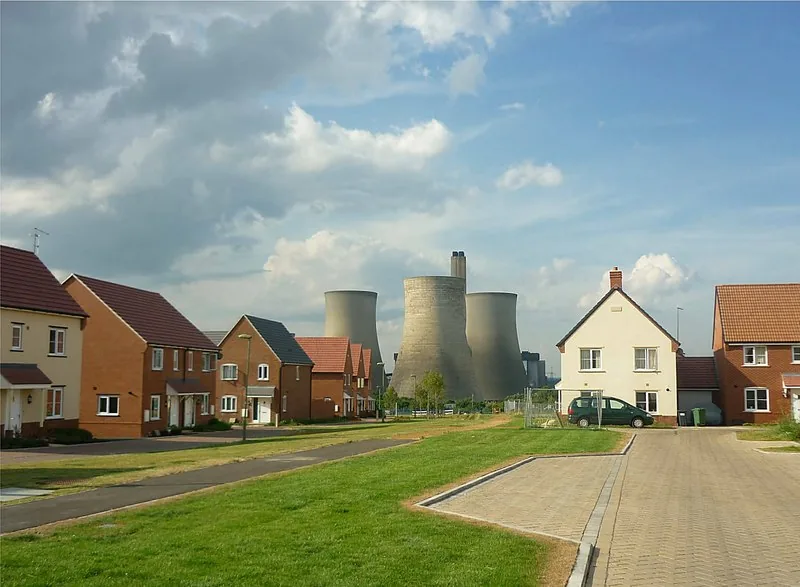

South Oxfordshire can show 4.46 years of housing land, 696 homes short, so the presumption in favour applies. And 8,200 allocated homes have not started.
South Oxfordshire District Council can demonstrate 4.46 years of deliverable housing land, and the test is five. That one number decides more planning applications in this district than any policy in the Local Plan, because when a council falls short the national framework says applications for homes should be granted unless there is a strong reason to refuse. The council’s own December 2025 statement sets it out, and the shortfall is 696 homes.
At the same time, the district’s three biggest housing allocations, 8,200 homes between them, have not delivered a single house.
The five-year test, worked through
The adopted South Oxfordshire Local Plan 2035 was adopted on 10 December 2020, so its housing requirement policies are now more than five years old. The council reviewed them and the review did not conclude that they were still fit, so under the National Planning Policy Framework the district’s land supply is measured against the government’s standard method instead of the adopted plan.
| Element | Figure |
|---|---|
| Standard method local housing need | 1,235 homes a year |
| Five-year total before buffer | 6,175 homes |
| Housing Delivery Test result | 143%, so a 5% buffer |
| Five-year housing requirement | 6,484 homes |
| Five-year deliverable supply | 5,788 homes |
| Position | 4.46 years, 696 homes short |
Note the Housing Delivery Test at 143%. South Oxfordshire is building well above what the government measured it against, which is why it gets the small 5% buffer rather than the 20% penalty. It still fails the five-year test, because the standard method requirement went up faster than the pipeline did.
The Joint Local Plan 2041, and why it is taking so long
South Oxfordshire and Vale of White Horse are writing one plan together. It was submitted for examination on 9 December 2024 and is being examined by inspectors Caroline Mulloy and Rachael Bust.
The first hearings ran in June 2025. In September 2025 the inspectors wrote with initial findings that stopped the examination in its tracks. After a procedural meeting in February 2026, the inspectors wrote again on 22 April 2026 saying an additional inspector would be appointed for resilience, that they would use written exchanges where fair to speed things up, and that they anticipated hearings in the week beginning 6 July with further sessions in autumn 2026.
That letter also contains the sentence that matters most: should the inspectors find the plan capable of adoption, “it appears unlikely that its adoption would take place by December 2026”, and because the plan was submitted in December 2024, that has implications for how robust its evidence still is. Standard method housing need figures are only meant to be relied on for two years in plan making.
Stage 2 hearings then ran as programmed at Abbey House in Abingdon:
| Date | Matter |
|---|---|
| Tuesday 7 July 2026 | Matter 1, legal and procedural requirements; Matter 2, maintaining effective cooperation |
| Wednesday 8 July 2026 | Matter 5, vision, objectives and spatial strategy |
| Thursday 9 July 2026 | Matter 3, the housing target and requirement (Policy HOU1) |
| Friday 10 July 2026 | Reserve day |
Twenty-four parties were down to speak on the housing target alone, among them Taylor Wimpey, Vistry, Bloor Homes, Crest Nicholson, Miller Homes, Gladman and Oxford City Council. Further hearings are expected in the autumn.
What the councils now want the target to be
At the July hearings the councils put forward a modification to Policy HOU1 that changes the plan period to 1 April 2025 to 31 March 2043. Their July 2026 note on revised scenarios sets out the arithmetic.
| Element | Homes |
|---|---|
| Local housing need, 552 a year for 18 years | 9,936 |
| Oxford's unmet need taken by South Oxfordshire | 4,950 |
| Total requirement 2025 to 2043 | 14,886 |
| Expected supply 2025 to 2043 | 16,930 |
| Headroom | 2,044 homes, 14% |
Two things stand out. The first is Oxford’s 4,950 homes. A third of South Oxfordshire’s entire eighteen-year requirement is housing for a city it does not contain, agreed because Oxford cannot build inside its own boundary. The second is the gap between the two official numbers now in play: the plan would set a requirement averaging about 827 homes a year, while the five-year test that decides today’s applications uses the current standard method figure of 1,235 a year. Both are legitimate. Plans submitted before the December 2024 framework are examined against the previous standard method, while land supply is judged against the present one. The practical result is that the council can be planning for 827 and failing a test set at 1,235 at the same time.
At the inspectors’ request the councils also ran a longer scenario, keeping the 2021 base date and extending to 2043: a requirement of 17,298 homes against supply of 20,994, a surplus of 3,696 or 21%.
Where the homes are supposed to go, and what has happened
The council’s own site returns are blunt about the big allocations.
| Site | Allocated | Completed | Status |
|---|---|---|---|
| Land adjacent to Culham Science Centre | 3,500 | 0 | Allocated at STRAT9 of the adopted plan |
| Grenoble Road | 3,000 | 0 | Allocation |
| Berinsfield | around 1,700 | 0 | Allocation |
| Site E, Reading Road, Wallingford | 502 | 25 | Outline and partial detailed consent, reserved matters under consideration |
| Land west of Wallingford, Site B | 234 | — | Reserved matters approved, 27 homes expected in the first year |
| Thames Farm, Reading Road, Shiplake | 95 | — | Reserved matters approved 2019 |
| 357 Reading Road, Henley-on-Thames | around 50 | 0 | Allocated, outline application under consideration |
| Henley Youth Club, Site X | 23 | 0 | Neighbourhood plan allocation, no homes in the trajectory |
Henley’s own contribution to the district’s housing supply is, on these figures, about 73 homes across two sites, neither of which has started. The Henley Youth Club site has been a neighbourhood plan allocation with a trajectory of zero in every year to 2041.
The council leader, Councillor Maggie Filipova-Rivers, made the same point to the government’s Oxford Growth Commission on 30 July 2026: “the challenge today isn’t simply allocating more land for housing, it’s making sure the homes we’ve already planned actually get built”, pointing at infrastructure and wastewater capacity as the constraints. She added that growth “has to work for people. That means making sure new development is supported by roads, schools, GP surgeries, utilities and green spaces.” The commission is due to report in autumn 2026.
At committee
South Oxfordshire’s planning committee met on 15 July and 30 July 2026 at Abbey House in Abingdon. The largest item at both was P24/S1336/FUL, the proposed Nuneham Solar Farm on land north west of Nuneham Courtenay west of the A4074, an application that has been running since 2024 with amended plans received in March 2026. On 15 July the committee voted to defer it for a site visit, and it returned to the 30 July agenda. The minutes of the 30 July meeting had not been published when this page was written, so the outcome is not confirmed here; the committee papers carry the decision once they are.
Looking further ahead: the council itself may change
In July the government decided to replace Oxfordshire and West Berkshire’s seven councils with three unitary councils from 1 April 2028. On 7 September it paused that decision and asked councils to stop implementing it while the whole programme is reviewed. The review has no published end date. Until it reports, South Oxfordshire District Council remains the planning authority for Henley, and who inherits the Joint Local Plan is an open question (our report on the pause).
Updated 11 September 2026: this section previously described the 2028 change as confirmed. The government paused it on 7 September.
Frequently asked questions
Does South Oxfordshire have a five-year housing land supply?
No. The council’s statement at a base date of 1 April 2025 gives 4.46 years, a requirement of 6,484 homes against a deliverable supply of 5,788, so it is 696 homes short. Where a council cannot demonstrate five years, the National Planning Policy Framework says applications for housing should be approved unless there is a strong reason to refuse.
What is South Oxfordshire’s housing target?
Two figures are in use. Land supply is tested against the current standard method figure of 1,235 homes a year. The submitted Joint Local Plan 2041, as the councils now propose to modify it, would require 14,886 homes between 2025 and 2043, an average of about 827 a year, of which 4,950 is unmet need transferred from Oxford.
When will the Joint Local Plan 2041 be adopted?
Not before 2027 on the inspectors’ own reading. In April 2026 they wrote that adoption by December 2026 “appears unlikely”. Stage 2 hearings ran in July 2026 and further hearings are expected in autumn 2026.
Why is South Oxfordshire building homes for Oxford?
Oxford cannot meet its own housing need inside the city boundary, so the surrounding districts take a share. Under the councils’ proposed modification, South Oxfordshire would take 4,950 of those homes and Vale of White Horse 1,830, both to be delivered between 2025 and 2043.
How do I find and comment on a planning application in Henley?
Through South Oxfordshire District Council, which is the planning authority for the whole district. Its find and comment on a planning application service is the official route, and committee agendas and decisions are published on its committee pages.
What is being built in Henley itself?
Very little in the council’s own returns. The two allocated Henley sites are 357 Reading Road, for around 50 homes and still at outline application stage, and the Henley Youth Club site for 23 homes, a neighbourhood plan allocation with nothing in its trajectory. Nearby, Thames Farm at Shiplake is allocated for 95.
Sources
- South Oxfordshire five-year housing land supply statement, December 2025 for the 4.46 years, the 1,235 standard method figure, the 143% Housing Delivery Test result, the 6,484 requirement, the 5,788 supply, the 696 shortfall and every site figure quoted.
- South Oxfordshire five year land supply page for the published statements.
- Inspectors’ letter ID16, 22 April 2026 for the additional inspector, the July and autumn hearing plan and the adoption timing.
- ID18 draft programme for hearing sessions part 2 for the July 2026 hearing dates, matters and participants.
- LPA85 note on revised employment and housing scenarios, July 2026 for the proposed HOU1 modification, the 14,886 requirement, the 16,930 supply and the Oxford unmet need figures.
- Joint Local Plan 2041 examination library and the examination hearings page for the examination documents.
- Council Leader urges Government’s Oxford Growth Commission to put communities first, 30 July 2026 for the leader’s quotes.
- Planning Committee agenda, 30 July 2026 and minutes, 15 July 2026 for the Nuneham Solar Farm deferral.
Planning positions change with every monitoring statement and every inspector’s letter. Check the council’s own pages before relying on a figure here. What homes in the district sell for is on Henley house prices; the roads being built alongside them are on Henley roadworks and travel.
Have your say