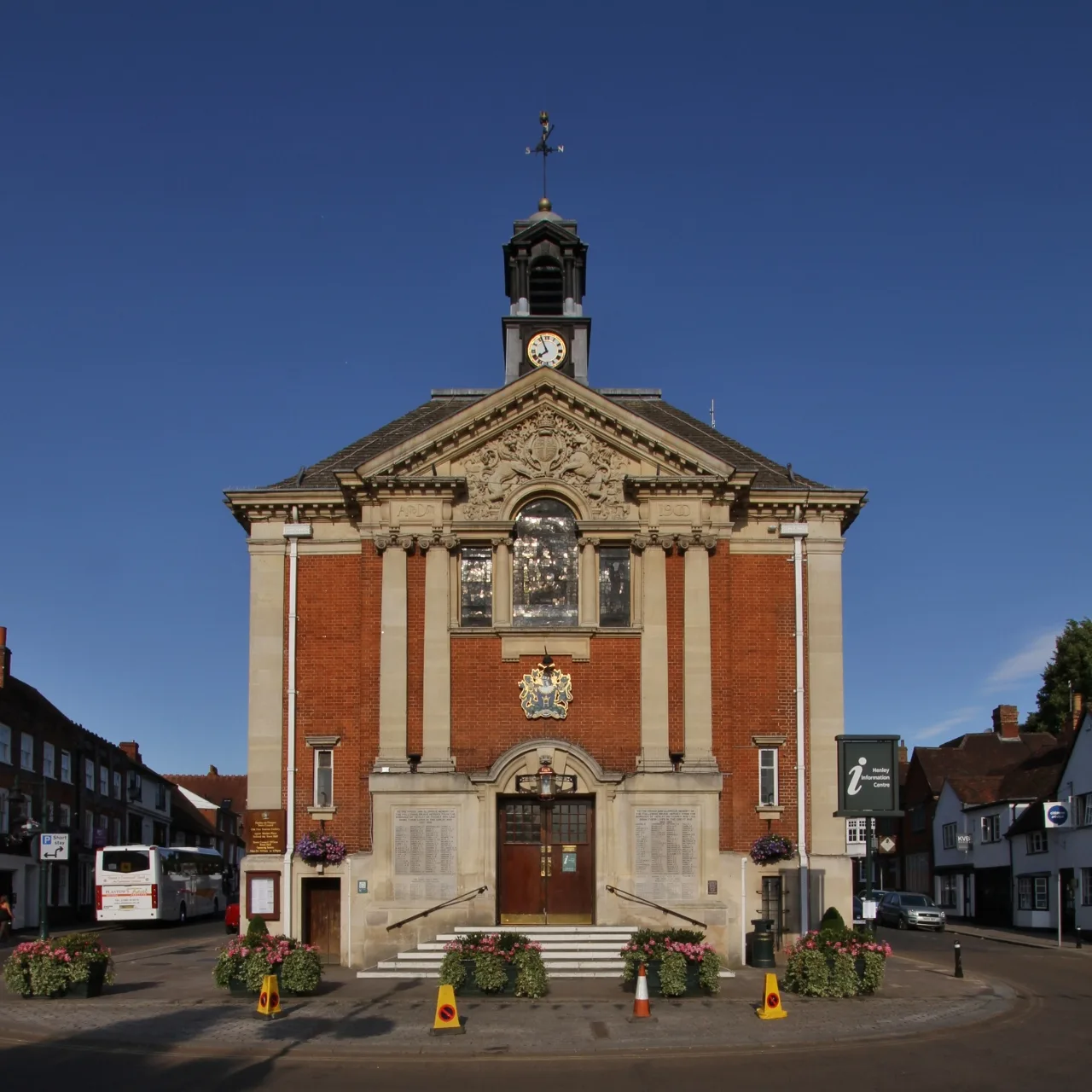

Henley's band D bill is £2,631.65 for 2026/27, up 4.86 per cent and the fifth highest of 86 South Oxfordshire parishes. Full band A to H table below.
South Oxfordshire District Council does not publish a council tax band table on its website. Ask it what you owe and it hands you a postcode calculator. The actual figures are in a statutory notice, a single-page PDF filed under a name nobody searches for, and they are worth reading, because Henley pays the fifth highest council tax of the 86 parish areas in the district.
A band D home in Henley-on-Thames pays £2,631.65 in 2026/27, up £122.09 or 4.86 per cent on last year. Everything below comes from the council’s own Notice of Council Tax for 2026/27, signed by head of finance Simon Hewings on 13 February 2026, and from the precepting bodies’ own leaflets. Checked 1 September 2026.
The full table for Henley, band A to H
| Band | 2026/27 | 2025/26 | Change |
|---|---|---|---|
| A | £1,754.43 | £1,673.04 | +£81.39 |
| B | £2,046.84 | £1,951.88 | +£94.96 |
| C | £2,339.24 | £2,230.72 | +£108.52 |
| D | £2,631.65 | £2,509.56 | +£122.09 |
| E | £3,216.46 | £3,067.24 | +£149.22 |
| F | £3,801.27 | £3,624.92 | +£176.35 |
| G | £4,386.08 | £4,182.60 | +£203.48 |
| H | £5,263.30 | £5,019.12 | +£244.18 |
Every band rose by the same 4.86 per cent. The 2025/26 column comes from the equivalent notice for 2025/26, set on 13 February 2025.
Where the money actually goes
Four bodies take a share of a Henley bill, and the district council you probably think of as “the council” takes the smallest of them.
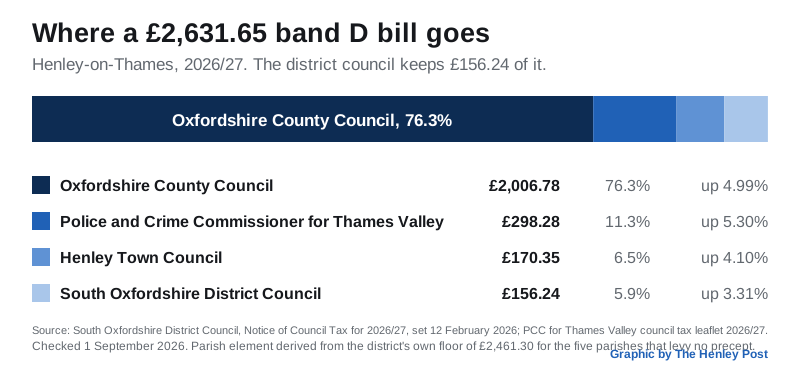
| Body | Band D | Share | Change |
|---|---|---|---|
| Oxfordshire County Council | £2,006.78 | 76.3% | up 4.99% |
| Police and Crime Commissioner for Thames Valley | £298.28 | 11.3% | up £15.00, 5.30% |
| Henley Town Council | £170.35 | 6.5% | up 4.10% |
| South Oxfordshire District Council | £156.24 | 5.9% | up £5.00, 3.31% |
| Total | £2,631.65 | up 4.86% |
- The county council’s 4.99 per cent is a 2.99 per cent general rise plus a 2 per cent adult social care precept, taking band D from £1,911.40 to £2,006.78.
- The police element rose by a flat £15 a year, which the Police and Crime Commissioner’s leaflet describes as 29p a week. The net revenue budget for 2026/27 is £622 million, up £27 million or 4.5 per cent (PCC for Thames Valley, council tax leaflet 2026/27).
- The district council raised its share by £5.00, from £151.24 to £156.24. Its total council tax requirement is £18.749 million, of which £8.735 million is collected on behalf of parish and town councils (South Oxfordshire council tax leaflet 2026/27).
- Henley Town Council takes a precept of £1,066,182 in 2026/27, which funds Mill Meadows, the Town Hall, Jubilee Park, the cemetery, the markets and the information centre (Henley Town Council, 2026-7 budget and precept).
One footnote for anyone checking the arithmetic against the town council’s own leaflet. The district’s notice implies a Henley parish element of £170.35, because the five South Oxfordshire parishes that levy no precept at all pay £2,461.30 at band D. The town council’s leaflet puts its own band D figure at £170.18, 17p lower. The two documents reconciled exactly last year, both giving £163.64.
The same town council leaflet states that Henley’s total band D bill in 2025/26 was £2,443.88. The district council’s statutory notice for that year records it as £2,509.56, £65.68 higher. That matters because the leaflet uses the smaller figure to work out the town council’s share of the bill.
Henley against the rest of the district
Of the 86 parish areas in South Oxfordshire, Henley is fifth for a band D bill.
| Parish | Band D 2026/27 |
|---|---|
| Wallingford | £2,701.91 |
| Berinsfield | £2,698.48 |
| Thame | £2,690.10 |
| Sonning Common | £2,654.06 |
| Henley | £2,631.65 |
| Didcot | £2,611.18 |
| Chinnor | £2,601.86 |
| Watlington | £2,599.98 |
| Goring-on-Thames | £2,594.57 |
Five parishes charge no precept at all and pay the district’s floor of £2,461.30: Adwell, Crowell, Little Wittenham, Stoke Talmage and Wheatfield. That is the pure county, police and district bill, and it is £170.35 less than Henley’s.
The gap shows up sharply on Henley’s own boundary. The same county, police and district services cost:
- Rotherfield Greys: £2,494.90, £136.75 less than Henley
- Shiplake: £2,497.42, £134.23 less
- Harpsden: £2,507.08, £124.57 less
- Bix and Assendon: £2,499.02, £132.63 less
Move a few hundred metres out of the town boundary and the difference is the town council’s precept, nothing else.
For comparison against the district’s other towns, the 2026/27 parish and town element at band D is £240.61 in Wallingford, £228.80 in Thame and £149.88 in Didcot. Henley’s £170.35 sits below the average of those three.
Checking and challenging your band
Bands were set on what a property was worth on 1 April 1991, not what it is worth now (how your council tax is calculated):
| Band | 1991 value |
|---|---|
| A | up to £40,000 |
| B | £40,001 to £52,000 |
| C | £52,001 to £68,000 |
| D | £68,001 to £88,000 |
| E | £88,001 to £120,000 |
| F | £120,001 to £160,000 |
| G | £160,001 to £320,000 |
| H | more than £320,000 |
Bands are set by the Valuation Office Agency, not the council. Look up any address free at gov.uk/council-tax-bands, and challenge a band through the VOA rather than the district council. A paper copy of the South Oxfordshire valuation list can be inspected at the council’s offices.
If your dispute is about the bill rather than the band, appeal to the council first. If it rejects the appeal, or you do not hear back within two months, you can go to the Valuation Tribunal, and you must do that within four months of your original appeal. Keep paying while you wait (appeal against your council tax).
Discounts, and the empty homes rule that changed in April
South Oxfordshire treats council tax as half a property tax and half a residence tax, assuming two adults (personal discounts).
- Single person discount: 25 per cent. It does not apply to empty properties, and the council reviews every single person discount every two years. No reply, no discount.
- 50 per cent where everyone in the household, you included, is disregarded.
- Disregarded people include live-in carers who are not your spouse, partner or child under 18, full-time students and student nurses, apprentices, people who are severely mentally impaired, school leavers under 20 until 1 November, monks and nuns, and 18 year olds for whom child benefit is still paid.
- Council Tax Reduction is means tested, needs savings under £16,000 unless you get the guarantee element of pension credit, and the maximum award is 100 per cent of the bill. That is set out at rule 239(1) of the council’s own 2026/27 working age scheme. A number of councils have cut their working-age maximum to 70 or 80 per cent. South Oxfordshire has not.
- Failing to report a change of circumstances within 21 days is a criminal offence. Telling the DWP, the Pension Service, HMRC or the council’s own elections team does not count: the council tax team has to be told directly.
The empty homes premium changed this April. A property left empty and unfurnished now attracts a 100 per cent premium after one year, where the trigger used to be two years (long term empty properties). The premium rises to 200 per cent at five years and 300 per cent at ten. Exceptions introduced in April 2025 give 12 months’ grace for major repairs or structural alterations, for a property genuinely on the market to sell or let, and after a grant of probate, and exempt annexes and homes owned by members of the armed forces.
South Oxfordshire publishes no premium on furnished second homes. Its only second home page offers a 50 per cent discount where the property is job-related, and another 50 per cent for up to 12 months on an empty, unfurnished home undergoing major structural work (job related second home discount).
The plan to abolish these councils is on hold
In July the government decided that South Oxfordshire District Council and Oxfordshire County Council would be replaced on 1 April 2028 by three new unitary councils, with Henley going into Ridgeway Council. On 7 September it paused that decision for a review with no published end date (local government reorganisation and devolution; our report on the pause). For now your bill still comes from the same councils. Henley Town Council was never part of the change and its precept continues.
Updated 11 September 2026: this section previously said both councils would disappear on 1 April 2028. The government paused that decision on 7 September.
Also on The Henley Post
- Henley bin collection days: what your county and district shares actually buy
- Parking in Henley: the district’s car parks and the town council’s
- Henley roadworks and travel: what the county is doing to the roads
Have your say