
No direct train. The fastest Henley to Paddington run is 45 minutes with a change at Twyford, and an annual season is £4,992. Fares for four local stations.
There is no direct train from Henley-on-Thames to London. Every journey starts with the branch shuttle to Twyford, and the fastest total time to Paddington is 45 minutes, which both Trainline and South Western Railway give for the route. An annual season to Paddington starts at £4,992, and that is the restricted version.
That makes Henley the awkward one of the district’s four commuter options. Thame and Wallingford have no station at all, and yet the station Thame uses is both faster to London and cheaper than Henley’s, while Didcot Parkway is quicker than either and the dearest ticket of the lot.
The four stations, compared
Henley-on-Thames to Paddington
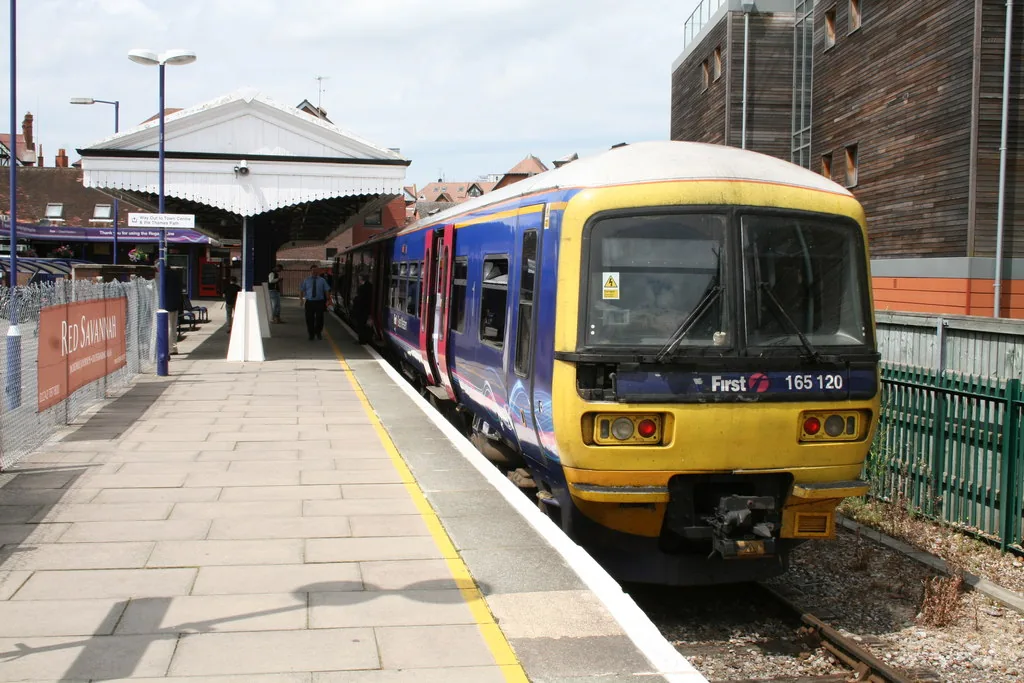
The branch runs from Henley through Shiplake and Wargrave to Twyford, four and a half miles of single track with no passing loop, which is why the timetable is a shuttle rather than a through service. At Twyford you join the main line into Paddington, on either a Great Western Railway service or the Elizabeth line.
Fastest total journey: 45 minutes. Trainline records the Henley to Paddington distance as 31 miles and states that there are no direct trains, so you should plan on at least one change.
| Ticket | Weekly | Monthly | Annual |
|---|---|---|---|
| Paddington, not via Reading | £124.80 | £479.30 | £4,992 |
| Paddington, via Reading | £147.00 | £561.80 | £5,852 |
| London Terminals, not via Reading | £151.80 | £583.00 | £6,072 |
| Travelcard zones 1 to 6, via Reading | £179.30 | £690.90 | £7,196 |
Read the route restriction before you buy, because it is the difference between £4,992 and £7,196 a year. The cheapest ticket is not valid via Reading, which means Twyford is your change and Reading is out of bounds even to pass through. The Travelcard version costs £2,204 a year more and buys you Reading as an option plus unlimited Tube and bus travel in zones 1 to 6. If your office is a walk or a cycle from Paddington, that £2,204 buys you nothing at all.
Didcot Parkway to Paddington
Fastest journey: 37 minutes, direct, 46 miles. Didcot has the fast trains, and it is the only station here where the timetable is dense enough that missing one does not reshape your evening.
| Ticket | Weekly | Monthly | Annual |
|---|---|---|---|
| London Terminals | £170.90 | £642.50 | £6,692 |
| London Terminals, also valid to Newbury | £179.90 | £674.70 | £7,028 |
| Travelcard zones 1 to 6 | £200.60 | £746.90 | £7,780 |
| Travelcard zones 1 to 6, also valid to Newbury | £205.50 | £765.70 | £7,976 |
Set that against the house prices and it is close to a wash. Didcot’s median sale is £250,000 below Henley’s; its season ticket is £1,700 a year dearer than Henley’s cheapest. On a thirty-year view the house wins comfortably.
Thame: the station is Haddenham and Thame Parkway
Thame has no railway station. The nearest is Haddenham and Thame Parkway, about two miles north east of the town and over the county boundary in Buckinghamshire, on Chiltern Railways into London Marylebone.
Fastest journey: 36 minutes, direct, 38 miles. That is the quickest London run available anywhere in this district, from the town that does not have a station. Chiltern runs two trains an hour to Marylebone, one fast and one semi-fast, plus one an hour to Birmingham Snow Hill, and the station has 432 parking spaces.
| Ticket | Weekly | Monthly | Annual |
|---|---|---|---|
| London Terminals, via High Wycombe | £134.20 | £515.40 | £5,368 |
| Travelcard zones 1 to 6, via High Wycombe | £161.80 | £621.40 | £6,472 |
Both Haddenham tickets are marked valid only via High Wycombe, which is the natural route anyway.
Wallingford: the station is Cholsey
Wallingford lost its passenger service and its nearest station is Cholsey, where Great Western Railway runs about two trains an hour each way off peak on electric Class 387s, dropping to one an hour on Sundays. The old branch between the two towns survives as the volunteer-run Cholsey and Wallingford Railway, whose round trip takes around 45 minutes, so it is a day out rather than a commute.
Fastest journey: 55 minutes, direct, 42 miles. Cholsey is the slowest of the four despite having no change in it, because the trains that stop there are the stoppers.
| Ticket | Weekly | Monthly | Annual |
|---|---|---|---|
| London Terminals, any permitted route | £146.90 | £562.20 | £5,856 |
| Travelcard zones 1 to 6 | £179.00 | £667.40 | £6,952 |
Parking, if you drive to the train
This is the part that catches new Henley commuters out. The district council’s two big Henley car parks are short stay and will not hold you for a working day: Kings Road (317 spaces) and Greys Road (133 spaces) both give one hour free with a ticket, then charge £2.30 for two hours and £3.50 for three, and three hours is the maximum.
The only council long stay option in the town is Southfields, which has 54 spaces and charges £5.30 for five hours or £6.30 for ten. A monthly permit there is £68, or £34 at the discounted rate where it applies. At 54 spaces it is not a park and ride, and the sums make walking, cycling or the bus the realistic answer for most people. Full tariffs and the pay by phone codes are on the council’s car parks pages.
Frequently asked questions
How long does the train from Henley to London take?
The fastest advertised journey to London Paddington is 45 minutes, including the change. There is no direct service: you take the branch shuttle to Twyford and join a Great Western Railway or Elizabeth line train there.
Is there a direct train from Henley-on-Thames to London?
No. Trainline and South Western Railway both state that the route requires at least one change, normally at Twyford. The Henley branch is four and a half miles of single track and is worked as a shuttle.
How much is an annual season ticket from Henley to London?
From £4,992 for the Paddington ticket that is not valid via Reading, rising to £5,852 for the version that is, £6,072 for London Terminals and £7,196 for a zones 1 to 6 Travelcard season. Weekly equivalents run from £124.80 to £179.30.
What is the nearest station to Thame?
Haddenham and Thame Parkway, about two miles north east of the town, on Chiltern Railways to London Marylebone. It is 36 minutes direct at best, two trains an hour, and an annual season is £5,368, cheaper and faster than Henley.
What is the nearest station to Wallingford?
Cholsey, on the Great Western main line, with about two trains an hour off peak and a fastest run of 55 minutes to Paddington. The heritage Cholsey and Wallingford Railway still links the two towns but runs for visitors, not commuters.
Which station in South Oxfordshire is fastest to London?
Didcot Parkway for Paddington at 37 minutes, and Haddenham and Thame Parkway for Marylebone at 36 minutes. Both are direct. Henley is 45 minutes with a change, Cholsey 55 minutes.
Sources
- Trainline route pages for fastest journey times, distances and whether services are direct: Henley-on-Thames to London Paddington, Didcot Parkway to London Paddington, Haddenham and Thame Parkway to London Marylebone and Cholsey to London Paddington.
- Trainline season ticket pages, checked August 2026: Henley-on-Thames, Didcot Parkway, Haddenham and Thame Parkway and Cholsey.
- South Western Railway, Henley-on-Thames to London Paddington as a second source for the 45 minute fastest time and the change.
- South Oxfordshire District Council car parks in Henley-on-Thames for tariffs, permit prices and space counts.
- Cholsey and Wallingford Railway for the heritage service.
- Henley branch line and Haddenham and Thame Parkway railway station for the branch’s single-track layout, the Chiltern service pattern, the station’s distance from Thame and its 432 parking spaces.
Fares and times were checked in August 2026 and change with the timetable and the annual fares revision. Confirm before you travel or buy. What roadworks are on between you and the station is on Henley roadworks and travel; what the houses near each station cost is on Henley house prices.
Have your say