
South Oxfordshire had 53 households, with 84 children, in temporary homes in March. The prevention rate, 56 homes bought and a rough sleeper figure at odds.
South Oxfordshire District Council had 53 households in temporary accommodation at the end of March. Between them they had 84 children. The figures are in the government’s latest statutory homelessness tables, published on 13 August and still marked provisional.
The council marked World Homelessness Day on Saturday with a release on its record. Most of it is borne out by the official data. One number is not.
All the figures below are for the whole district. The government does not break them down by town, so there is no separate figure for Henley.
How many people are in temporary homes
The number has barely moved in a year. It dipped from 54 households in March 2025 to 48 in December, then rose to 53 by March 2026.
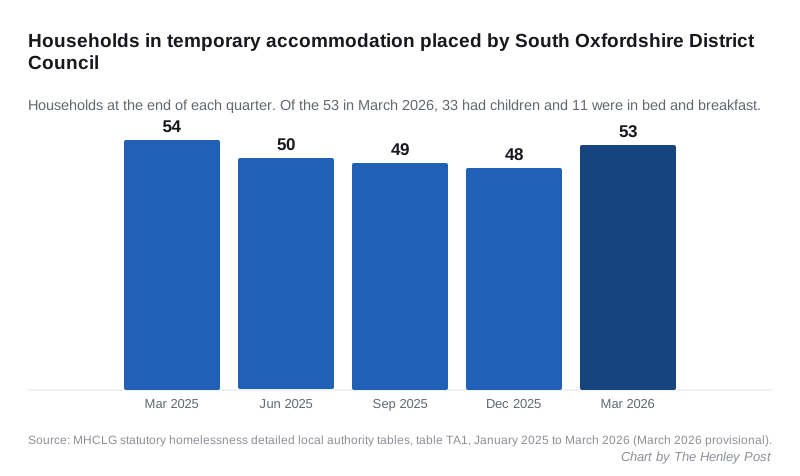
Of the 53 households at the end of March:
- 33 had children
- 11 were in bed and breakfast, three of them with children
- one family with children had been in bed and breakfast for more than six weeks
That last figure matters because of the Homelessness (Suitability of Accommodation) Order 2003. It says bed and breakfast is not suitable for a family with children for longer than six weeks. The tables record one such case on that night, and do not say why.
Bed and breakfast use has varied. It was nine households in March 2025, six in June, seven in September and five in December, before rising to 11.
Set against the size of the district, the numbers are small. South Oxfordshire had 0.8 households in temporary accommodation per 1,000 households. The figure for England was 5.5.
What the council gets right
The release says the joint housing team prevented homelessness for about 78 per cent of households at risk over five years, against about 55 per cent nationally. The quarterly tables support that.
Between January and March 2026, 76 South Oxfordshire households came to the end of the prevention stage. Of those, 58 had secured a home for at least six months. That is 76 per cent. For England the figure was 55 per cent, 19,230 out of 35,130.
The quarters before were similar:
| Quarter | Prevention cases ended | Home secured | Rate |
|---|---|---|---|
| Apr to Jun 2025 | 67 | 53 | 79% |
| Jul to Sep 2025 | 66 | 53 | 80% |
| Oct to Dec 2025 | 87 | 62 | 71% |
| Jan to Mar 2026 | 76 | 58 | 76% |
Most of the 58 went into social housing:
- 35 into social rented homes, 30 of them housing association tenancies
- 18 into private rented homes
- 5 to stay with family
Why people asked for help
The council assessed 132 households in the first three months of 2026. It owed 130 of them a duty. Ninety-nine were threatened with homelessness, and 31 were already homeless.
The biggest single cause among those threatened was the end of a private tenancy, at 37 households. In 25 of those, the landlord wanted to sell or re-let. Nineteen of the 25 were landlords selling.
Of the 31 already homeless, 11 were sleeping rough when they applied.
The figure that does not match
The release says the autumn 2025 rough sleeping count found nine people sleeping rough in South Oxfordshire and five in the Vale.
The government’s rough sleeping snapshot for autumn 2025, published in February, lists three for South Oxfordshire and four for the Vale. The snapshot is compiled from figures each council submits. The release does not explain the difference.
Either way, the district’s numbers are among the lowest in the region. The snapshot puts South Oxfordshire at 1.9 people per 100,000. The South East average was 8.3. The district’s figure has been between zero and seven every year since 2010.
The snapshot covers a single night. The 11 households who were sleeping rough when they applied between January and March show that more people pass through than any one night records.
Council homes again
Cllr Tony Worgan, South Oxfordshire’s cabinet member for housing, said the two councils were becoming social landlords “for the first time since 1997”.
He said that with government funding they have bought 81 homes so far, 56 of them in South Oxfordshire and 25 in the Vale. The release does not say where the homes are or how many are let.
The release also says that since 2023:
- 186 South Oxfordshire households moved from temporary to long-term housing
- 1,298 South Oxfordshire households were housed through the housing register
These two figures come from the council alone. The government tables do not publish them in the same form.
What it means for you
- Ask early. If you could lose your home within 56 days, the council has a duty to help you try to keep it or find another. The council’s homelessness page explains the prevention and relief stages and the personal housing plan.
- A notice from your landlord counts. The end of a private tenancy was the most common reason people asked for help this year. You do not need to wait for an eviction date.
- Out of hours. If you are homeless tonight with nowhere to go, the council’s out of hours number is 01235 422420.
- Families in bed and breakfast. If you have children and have been in bed and breakfast for close to six weeks, tell your housing officer. The 2003 Order treats longer stays as unsuitable for families.
For other council services, see our guides to Henley council tax bands and Henley bin collection days.
Have your say