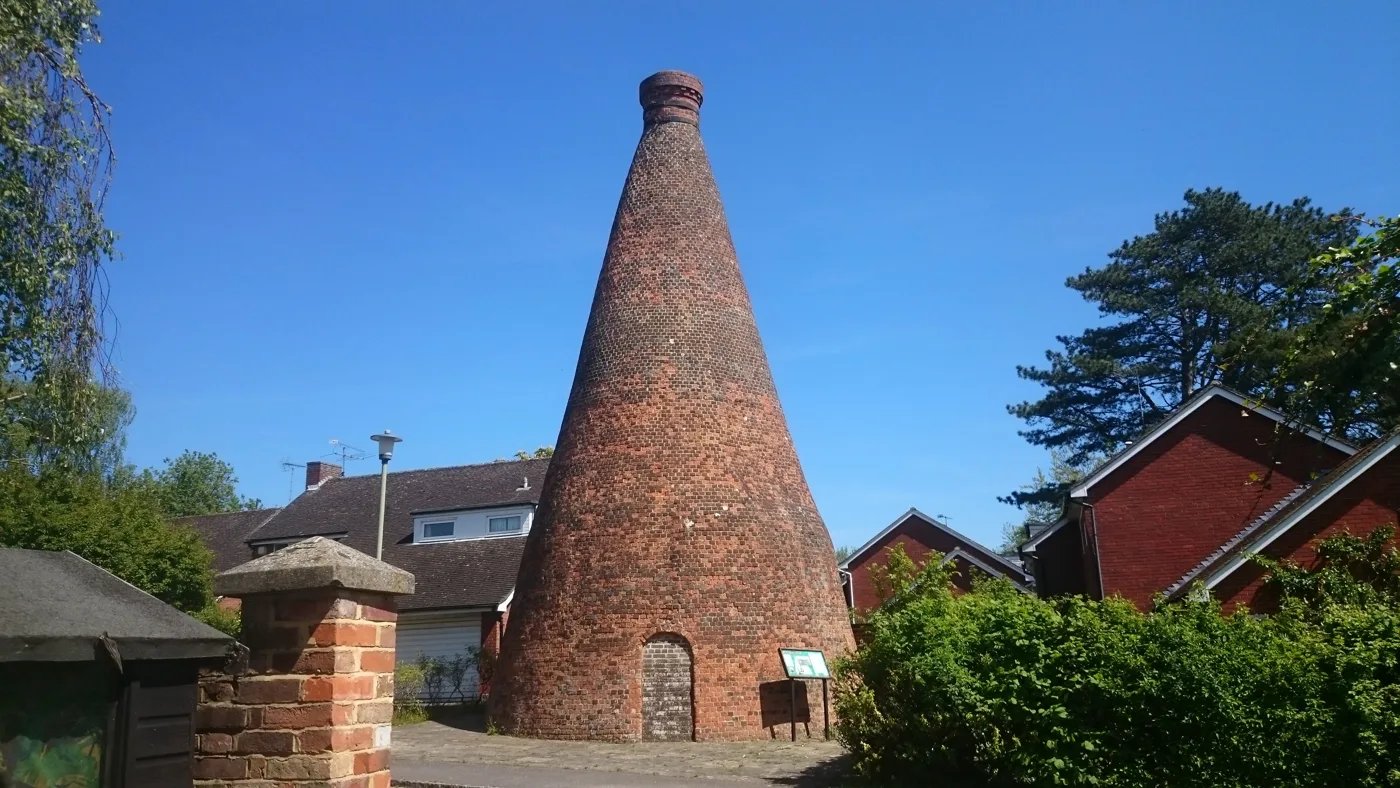

The county wants to rebuild Nettlebed's Grade II* kiln without its 1927 top hat. The district heritage officer, the parish and 60 residents object.
Oxfordshire County Council wants to rebuild the Nettlebed brick kiln without the “top hat” that has crowned it since the 1920s. South Oxfordshire District Council’s own heritage officer has objected. So have Nettlebed Parish Council and 60 members of the public.
The kiln is Grade II* listed. Historic England’s list entry describes a brick cone about 10 metres high, “said to be the only estate kiln remaining of its period and of local design”. It stands just off the A4130 in Nettlebed, about five miles north-west of Henley.
The application, P26/S2184/LB, is still undecided. The formal consultation closed on 18 August.
What the county is asking for
The top hat and the top 20 courses of the original kiln were taken down in July 2025, after a structural engineer found a risk of collapse. Every brick was numbered and stored indoors. The county is now asking for listed building consent for that work after the event, and for the rebuild.
Its application covers:
- consent for the emergency dismantling already done
- rebuilding the top 20 courses of the original kiln, using the salvaged bricks where they are sound
- stripping out cement repointing and repointing the whole kiln in lime mortar
- not putting the top hat back
The county’s heritage statement, written by its agent Period Home Projects, says the top hat was added in 1927, when the kiln was converted from firing bricks to burning lime. It argues that the extra weight “may well have contributed to masonry failure”. It calls leaving it off “regrettable” but assesses the effect on the listed building as “neutral”.
What the engineer found
The engineer inspected the kiln from scaffolding on 13 December 2024. The site notes, filed with the application, say:
- “The kiln is significantly decayed towards the top of the structure. The structural integrity is compromised and there is risk of collapse.”
- the cause appears to be water getting into the brickwork, then freezing and thawing
- the kiln leans to the south, and that side has decayed faster
- the top hat “is of significant weight and is generating a large thrust force on the lower masonry”
The engineer’s recommendation on that last point was not to remove the top hat. It was to rebuild with bed-joint reinforcement to resist thrust. The heritage statement describes that option as 6mm steel bars hidden in the mortar joints, and dismisses it as “an unwelcome intervention within the original structure”.
Why the heritage officer objects
The district council’s heritage specialist responded on 3 August. The officer has no objection to rebuilding the top courses. The objection is to losing the top hat:
“I cannot support the loss of the ‘top hat’ section of the kiln.”
The reasons, from the response:
- the top hat is part of how the kiln’s use changed, which “reflects national changes in the demand for materials”
- its continued use into the 20th century is “likely to be partially responsible for its survival”
- it contributes to the kiln’s appearance and, judging by the public comments, to what it means to the village
National planning policy requires “clear and convincing justification” for any harm to a listed building. The officer says the justification here is “insufficient”, because other ways of slowing the decay exist. The response names rebuilding without the lean, capping the top, and bed-joint reinforcement. It concludes there is “no public benefit” from permanent removal to outweigh the harm.
What the parish council wants
Nettlebed Parish Council’s response, filed on 1 August, is narrower than a flat objection. It supports the emergency works and the rebuild of the top 20 courses, and says those should go ahead.
It objects only to losing the top hat for good. It argues:
- the top hat changes the kiln’s outline “from a single unbroken cone to a distinct two-stage profile”, the shape the village recognises
- recording the brickwork “is not a substitute for retention”
- no proper comparison of the options has been done, including the reinforcement the county’s own engineer suggested
It asks the council to require that comparison, reviewed by the conservation officer with Historic England, before deciding this part. It also wants the stored bricks and ironwork kept safe so the top hat can still go back. It has asked to speak when the application reaches planning committee.
Historic England replied on 28 July that it is not offering advice on this case, and told the district to rely on its own conservation specialists.
Where it stands
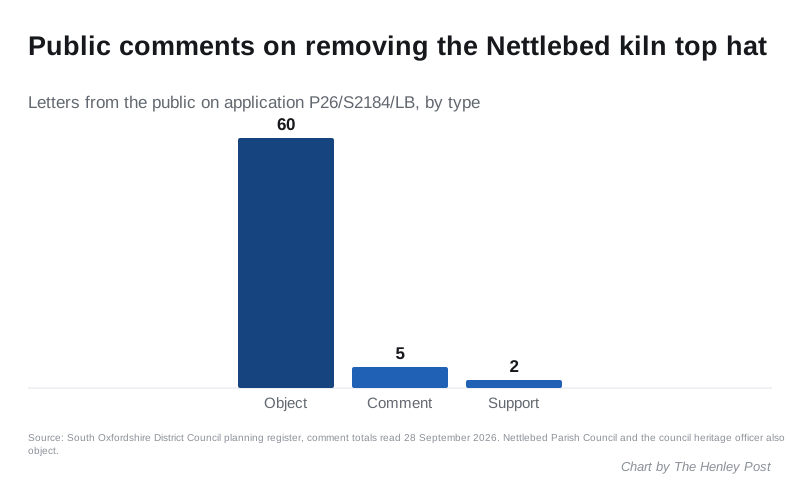
When we read the register on 28 September it showed:
| Item | Detail |
|---|---|
| Status | Under Consideration, “Not Yet Recommended” |
| Validated | 10 June 2026 |
| Consultation ended | 18 August 2026 |
| Target date on the register | 5 August 2026, now passed |
| Public comments | 60 objections, 5 comments, 2 in support |
| Committee date | none listed yet |
The register says the target date “may change, for example if an extension of time is agreed”. No new document has been filed since 18 August.
What it means for you
The kiln will not stay as it is now either way. Both sides agree the top 20 courses should be rebuilt in lime mortar. The argument is only about whether the top hat goes back on.
The bricks still exist. They are numbered and stored, so the top hat could be rebuilt later if consent requires it.
You can follow the decision. The application number is P26/S2184/LB. If it goes to planning committee, the parish council will speak there, and the meeting will be public. We track district planning decisions on our Henley planning page.
Sources
- Application P26/S2184/LB, South Oxfordshire District Council planning register, read on 28 September 2026, for the proposal, dates, status and comment totals. Documents read from the register: the application form (applicant Oxfordshire County Council); the heritage statement and impact assessment, June 2026, by Period Home Projects; the structural engineer’s site visit notes of 13 December 2024; the design and access statement; the heritage consultation response of 3 August 2026; the Nettlebed Parish Council response of 1 August 2026; and the Historic England letter of 28 July 2026.
- Historic England list entry 1181146, Brick Kiln, Nettlebed, for the Grade II* listing and the description.
- Nettlebed community website, planning application notice, 6 August 2026.
Have your say